
- Canada
- Last Update 11.30 am
- 21℃ Toronto, Canada
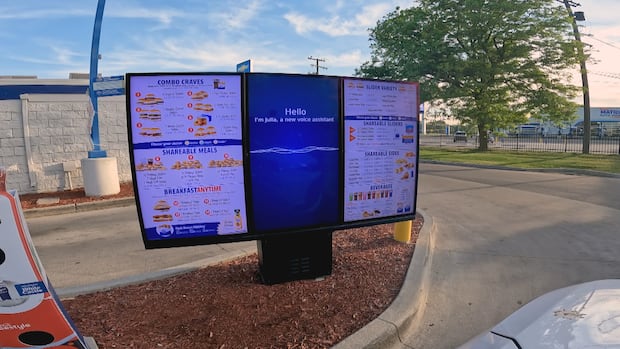
Drive-thru chatbots are clocking in at fast-food chains
A busy drive-thru in suburban Detroit looks like any other — until you inch close enough to hear the voice taking the order. It's not human. It's artificial intelligence.
Across the United States, fast-food chains are turning to AI to run their drive-thru counters — and Canada could be next. Companies say the technology is now more accurate than human employees, while some labour organizers worry it could displace fast-food workers.
AI drive-thrus first appeared as early as 2021, though many of the pilot projects were anything but smooth. Some customers tried to trip up the AI on purpose, asking for 100 cups of water or an item that wasn't on the menu. Others became frustrated when the chatbot made a mistake or repeatedly tried to upsell them. Many of the mix-ups went viral, prompting companies to return to humans taking the orders.
Fast-food chains in the U.S. are turning to AI to take drive-thru orders, and Canada could be next.
In recent months, voice AI technology has improved rapidly, and many fast-food companies are rolling out chatbots at U.S. locations. McDonald's is testing a Google-powered AI drive-thru system, while Taco Bell has partnered with Nvidia for its chatbots.
U.S. burger chain White Castle worked with SoundHound on an AI chatbot called Julia. The AI listens to the customer and answers questions. Inside the restaurant, the order appears for staff to prepare. If there's a problem, an employee takes over and completes the order.
The technology isn't perfect yet, but it uses generative AI, which means it can learn and improve over time. Jamie Richardson, White Castle's chief marketing officer, said the data shows the AI actually gets most orders right.
Fast-food businesses have faced serious labour challenges in recent years, from rising costs to high worker turnover, and the sector is betting on AI to fill the gaps.
Over the next five years, the World Economic Forum forecasts positions such as cashiers will be among the fastest-declining jobs because of automation. Some labour organizers worry the rapid technological change will have an outsized impact on young people looking for entry-level jobs.
Recent News