- Canada
- Last Update 11.30 am
- 21℃ Toronto, Canada
Are more police officers getting killed in the line of duty? Here's what the data tells us
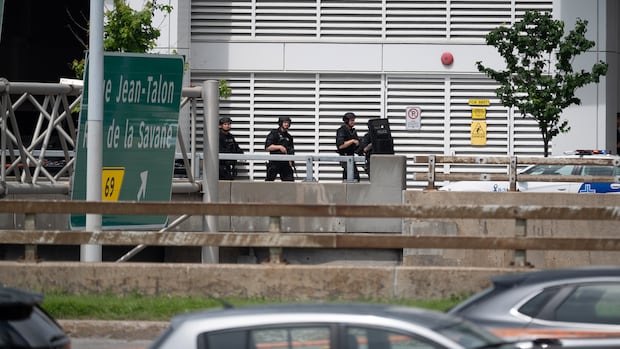
A busy Montreal neighbourhood went into lockdown Monday after an armed standoff at a hotel in Côte-des-Neiges left a police officer, a civilian and a suspect dead. Another officer and a bystander were injured in the attack.
The shooting marked the third time an officer in Canada was killed in less than two weeks, raising questions about whether violence against officers is increasing. It also came one day after two RCMP officers responding to a call for help in Melville, Sask., were shot and injured.
But researchers who track police deaths say the number of officers killed on duty this year remains within the historical range — and officers are less likely to die as a result of violence now than in past decades.
After a cluster of officer deaths, researchers say on-duty police killings remain within the historical range.
"It's important to understand that a short cluster of deaths does not necessarily make for a trend or a wave in on-duty police officer deaths," Justin Piché, a criminology professor at the University of Ottawa, said in an interview with CBC's The National.
Piché has collected data on deaths resulting from intentional harmful acts among police officers dating back to the 1960s. He says the number of officers killed by someone intentionally trying to harm them is lower today than it has been in the past.
There were 415 on-duty police officer deaths across Canada between 1962 and 2026, for an average of 6.5 such deaths per year. There were no on-duty police deaths across Canada in 2024 and 2025 — an anomaly in the 64 years of data. In 2023, eight officers died on duty, six of them as a result of intentional violence.
Greg Brown, a former Ottawa police officer now working as an adjunct professor at Carleton University's department of law and legal studies, told CBC News Network that he had seen "a marked shift throughout society in terms of the public's confidence and trust in the police."
Experts contacted by CBC News say it is likely too early to draw conclusions about the violence in Montreal and other Canadian cities. "A lot of things get said in the wake of these moments that aren't necessarily rooted in facts," said Piché. "So we have to be vigilant to that, and attentive to that."
Recent News